My Dog Has a Swollen Eye: What Should I Do?
Call your veterinarian the same day your dog’s eye begins to swell. A dog swollen eye can signal anything from a mild allergic reaction to a scratched cornea, an infection, or a pressure problem inside the eye, and the eye tolerates delay far less than most parts of the body. Vision is at stake in some of these conditions, and a problem that looks minor in the morning can look very different by evening. The eye is also hard to assess at home, because redness, squinting, discharge, and swelling overlap across many unrelated diagnoses. You will rarely know the cause by looking, and that uncertainty is the reason a quick exam beats a wait-and-see approach. Here is something many owners find surprising: the cornea has no blood supply of its own, which helps explain why damage there heals slowly and can worsen fast.
What Causes a Dog’s Eye to Become Swollen?
A swollen eye can start on the surface, in the eyelids, or deep inside the eye, and the cause shapes how urgent the problem is.
Allergies and Irritants
Allergic reactions often puff up the eyelids and the tissue around the eye, sometimes with itching and watery discharge. Pollen, dust, certain foods, and insect stings are frequent triggers. Smoke, shampoo, and other irritants can inflame the eye’s surface and make the lids look puffy. A dog with swollen eyes from an allergy often involves both eyes, though one may look worse than the other.
Infections and Injuries
Conjunctivitis, an inflammation of the pink tissue lining the eye, creates redness, swelling, and discharge. Bacteria, viruses, and irritants can all cause it. Scratches to the cornea, a grass seed trapped under the lid, and bite wounds from rough play can injure the eye and trigger swelling. An abscess behind the eye, sometimes linked to a dental infection, can push the eye forward and make it look enlarged. That kind of swelling often comes with pain and a reluctance to eat. A dog’s swollen eye with heavy discharge and squinting often raises concern for infection or injury rather than allergy.
Problems Inside the Eye and Eyelid
Glaucoma, a buildup of pressure inside the eye, can cause a swollen, cloudy, painful eye and can threaten vision quickly. Uveitis, an inflammation within the eye, also brings redness and squinting. In “cherry eye,” a gland in the third eyelid pops out and forms a red bulge in the corner of the eye. Styes, cysts, and eyelid tumors can swell the lid itself. Because these conditions look similar from the outside, a veterinary exam is the only way to tell them apart.
Signs That Often Travel With Swelling
No matter the cause, swelling rarely arrives alone. Watch for these changes:
- Squinting or holding the eye closed
- Redness in the white of the eye or the lining of the lids
- Clear, yellow, or green discharge
- Pawing or rubbing at the face
- A cloudy or bluish look to the surface of the eye
How Will a Veterinarian Treat a Swollen Eye?
Treatment depends entirely on the cause, which is why the exam always comes first.
Finding the Cause
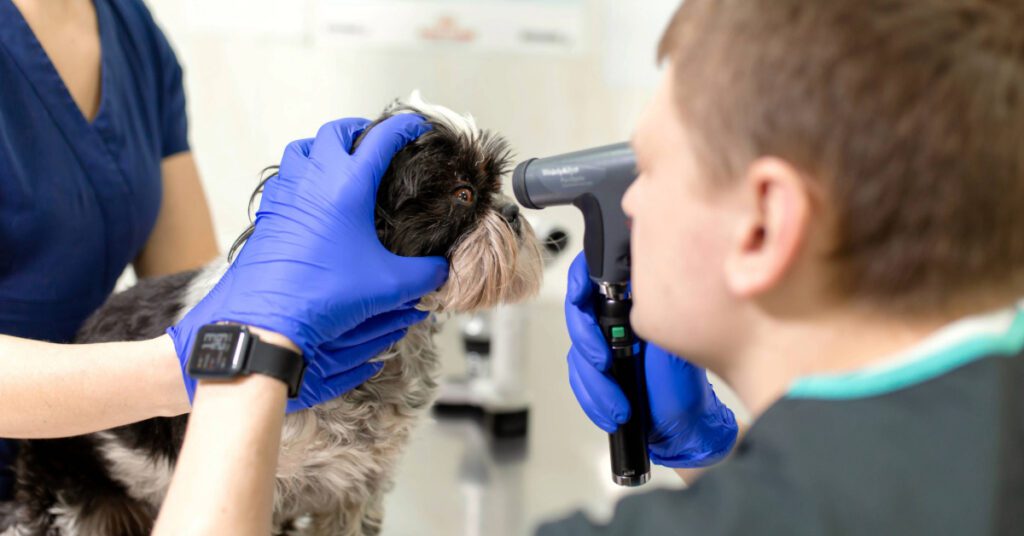
Your veterinarian will examine the eye with a bright light and magnification, check how well your dog blinks and tracks movement, and ask about the timeline. Common tests include a fluorescein stain, which highlights scratches or ulcers on the cornea, a tear production test for dry eye, and a pressure measurement to check for glaucoma. Sometimes our team also examines the mouth and the rest of the body, since a dental problem or a whole-body illness can be to blame. A swollen eye that looks identical on two dogs can have completely different causes, which is why testing matters more than appearance.
Common Treatment Approaches
Many swollen eyes respond to prescription drops or ointments, which may include antibiotics, anti-inflammatories, or pressure-lowering medication. Pain relief is often part of the plan, because eye conditions hurt. Allergic cases may call for allergy-focused therapy, and a protective cone is sometimes prescribed to stop a dog from rubbing and worsening an injury. The specifics depend entirely on the diagnosis, so please never use leftover or human eye medications. Your veterinarian will tell you what improvement to expect and when to call back if the eye changes, so you are never left guessing.
When Surgery or a Specialist Is Needed
Cherry eye, certain ulcers, eyelid growths, and foreign bodies may need a procedure. Glaucoma and other complex conditions often benefit from a veterinary ophthalmologist. Your veterinarian will explain whether a referral makes sense, outline likely costs, and schedule recheck visits to confirm healing, because eyes can change quickly.
Which Eye Symptoms Mean You Should Head In Right Now?
Some swollen eyes can be seen within a day, but several signs turn the situation into an emergency.
Urgent Warning Signs
Seek care immediately if the swelling comes with any of these:
- An eye that bulges or looks pushed out of the socket
- A sudden cloudy, bluish, or intensely red eye
- Severe squinting, or an eye your dog cannot open
- A visible injury, a foreign object, or bleeding
- Swelling after trauma, a scuffle, or an insect sting
- Lethargy, vomiting, or loss of appetite alongside the swelling
- Sudden bumping into objects, which suggests vision loss
Any one of these signs is reason enough to go. You do not need to see several at once.
Why a Dog Swollen Eye Cannot Wait
Conditions such as glaucoma and deep ulcers can damage vision within hours to days. At Frontier Veterinary Urgent Care in Greenfield, WI, we treat eye swelling as time-sensitive, because early care gives your dog the best chance at comfortable, healthy vision. Even when the problem looks mild, a veterinarian can confirm that nothing serious hides beneath the surface. A swollen eye that seems to settle for an hour can still hide a deeper problem, so a dog’s swollen eye that improves and then returns also deserves an exam.
What to Do Before You Arrive
Call ahead at 262-226-2055 so our team can prepare for your visit. Please do not apply human eye drops, ointments, or home remedies, since many ingredients can harm a dog’s eye. Avoid pressing on the area, and bring a list of any medications your dog takes. Note when the swelling started and whether it has changed since, because that timeline is valuable information. If your dog keeps pawing at the eye, mention it on the phone so the team can advise you on safe transport.
How Can You Catch Eye Problems Before They Get Serious?
A quick weekly look at your dog’s eyes can reveal changes long before swelling appears.
Know What Normal Looks Like
Healthy eyes look bright, clear, and equal in size, with little or no discharge. Note your dog’s usual eye color, the position of the eyelids, and the amount of morning crust in the corners. When you know what normal looks like, small shifts stand out, and you can describe them accurately to your veterinarian. A clear photo of your dog’s eyes while they are healthy also gives you a useful comparison later.
Breeds and Ages That Need Extra Attention
Some dogs face higher odds of eye trouble because of their anatomy or age:
- Short-nosed breeds such as pugs, bulldogs, and Boston terriers, whose eyes sit more exposed
- Breeds with loose, droopy lids, such as basset hounds and cocker spaniels
- Senior dogs, who face higher odds of glaucoma and eyelid growths
- Dogs with allergies or dry eye
Owners of these dogs may want to ask about an eye check at every routine visit, since catching small changes early is easier than reversing damage later.
Everyday Habits That Protect Eyes
Professional groomers can trim hair around the eyes safely, so ask them rather than trimming close to the eyelids yourself. Skip the open car window on highway drives, since debris can fly into a dog’s eyes, and supervise play in tall brush. If you notice repeated tearing or redness, schedule an exam instead of waiting for a dog swollen eye to develop. Keep routine exams current as well, because a yearly visit gives your veterinarian a chance to look at the eyes even when nothing seems wrong.
Why Early Care Usually Leads to Better Outcomes
Most swollen eyes improve well when a veterinarian sees them early. Allergic reactions often settle quickly with the right treatment, and infections and minor scratches commonly heal within days to a couple of weeks when they are caught before complications set in. More complex conditions such as glaucoma take longer to manage, but early diagnosis helps protect vision and limits long-term pain. Recovery usually includes a few follow-up visits so the team can confirm the eye is healing. Many dogs return to normal activity quickly once treatment begins, though rechecks still matter even when the eye looks better. A dog with a swollen eye is stressful to watch, yet it is also one of the more treatable problems when the right people look at it quickly. At Frontier Veterinary Urgent Care in Greenfield, WI, the goal for every swollen eye is the same: find the cause fast, because the sooner a dog arrives, the more options our team has.