
Why Won’t My Cat Use the Litterbox?
When a cat won’t use the litterbox, it’s one of the most frustrating and confusing problems a cat owner can face. The good news is that most cases of litterbox avoidance have a fixable cause. Whether your cat is going outside the box, refusing to use it entirely, or showing signs of straining inside it, this guide will help you understand what’s going on and when it’s time to see a vet.
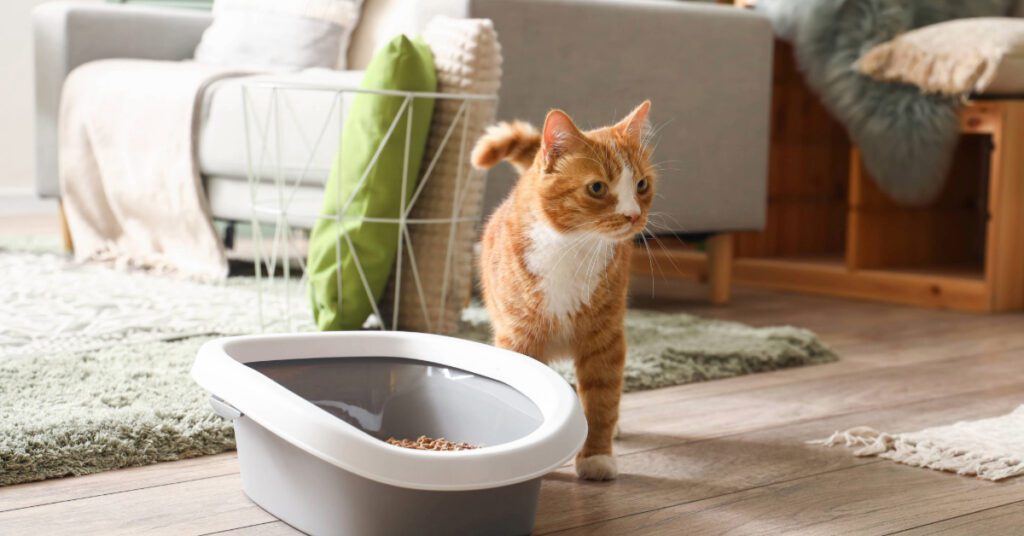
Why Is My Cat Not Using the Litterbox?
When a cat stops using the litterbox, there are typically two categories of causes: medical and behavioral. It’s important to rule out medical issues first, because what looks like a behavioral problem such as going on the floor near the box can actually be a sign that your cat is in pain or experiencing a urinary tract problem.
Medical Reasons a Cat Won’t Use the Litterbox
Several health conditions can cause a cat to avoid the litterbox or have accidents outside of it. These include:
- Urinary tract infection (UTI): Causes painful, frequent urination and may cause your cat to associate the box with pain
- Feline idiopathic cystitis (FIC): Bladder inflammation without infection; common in stressed cats and often causes straining
- Bladder stones or crystals: Can cause partial or complete blockage, which is a medical emergency, especially in male cats
- Kidney disease: Can increase urinary frequency and urgency
- Diabetes: Causes increased water intake and urination
- Arthritis or mobility issues: Older cats may avoid the box if it has high sides or requires effort to enter
- Constipation or gastrointestinal issues: May cause a cat to associate the box with discomfort
If your cat is straining in the litterbox without producing urine or producing only small amounts, this is a veterinary emergency. Urinary blockage can be fatal within 24 to 48 hours if untreated. Contact Frontier Veterinary Urgent Care in Greenfield immediately if you observe this in your cat.
Behavioral and Environmental Reasons
If your cat has been examined and no medical cause has been found, the issue is likely behavioral or environmental. Common triggers include:
- Litterbox isn’t clean enough: Cats are fastidious animals. A box that hasn’t been scooped recently is often rejected outright.
- Wrong litter type or scent: Many cats have strong preferences for unscented, fine-grained clumping litter. Switching litter brands or types can trigger avoidance.
- Litterbox size or style: Some cats dislike covered boxes, prefer a larger surface area, or need lower sides to enter comfortably.
- Location: A box placed near loud appliances, in a high-traffic area, or next to food and water may be avoided.
- Not enough boxes: The general rule is one litterbox per cat, plus one extra. A household with two cats needs at least three boxes.
- Negative associations: A cat that was frightened, startled, or felt unwell while using the box may begin to avoid it.
- Stress and changes in the home: New pets, new people, moving, or schedule changes can all trigger litterbox avoidance in anxious cats.
What Does It Mean When a Cat Poops Outside the Litterbox?
A cat that defecates outside the box, but not in the box, is often communicating something specific. This behavior can point to constipation, pain during defecation, or dissatisfaction with the box itself. In multi-cat households, it may also indicate that one cat is being bullied away from the box by another.
If the accidents are happening in one specific location like behind the couch or in a particular room, your cat may be choosing a preferred elimination spot. Placing a litterbox in that location temporarily can help redirect the behavior while you investigate the underlying cause.
How Do I Get My Cat to Use the Litterbox Again?
Once medical causes have been ruled out, there are several evidence-based strategies for encouraging a cat to return to the litterbox:
- Increase the cleaning frequency: Scoop at least once daily, and do a full litter change weekly.
- Try different litter types: Offer two boxes side by side with different litter types to see which your cat prefers.
- Add more boxes: More boxes means more options and less competition in multi-cat homes.
- Reassess box placement: Move boxes to quieter, more private locations that are easy to access from multiple directions.
- Remove or neutralize soiled areas: Use an enzymatic cleaner on any spots your cat has used outside the box. Cats are drawn back to areas where they can smell their own waste.
Be patient throughout this process. Scolding a cat for eliminating outside the box does not work and often makes the problem worse by increasing your cat’s stress.
When Should I Take My Cat to the Vet for Litterbox Problems?
You should always start with a veterinary evaluation when a cat won’t use the litterbox, especially if the behavior change happened suddenly. A sudden change in elimination habits, particularly in a cat that previously had no issues, is a red flag for an underlying medical condition.
Contact your veterinarian right away if your cat is:
- Straining to urinate with little or no output
- Crying or vocalizing while in the litterbox
- Producing blood in the urine
- Showing lethargy, vomiting, or loss of appetite alongside litterbox changes
- A male cat with any signs of urinary difficulty
Our team at Frontier Veterinary Urgent Care in Greenfield, WI can evaluate your cat for urinary and gastrointestinal conditions, provide pain management if needed, and help you develop a behavioral plan if no physical cause is found. Don’t assume it’s “just behavioral” until a medical workup has been done.
Litterbox Problems Don’t Have to Be Permanent
Most cats that stop using the litterbox can be helped with the right combination of medical care, environmental adjustments, and patience. The key is taking the problem seriously and acting promptly. A cat that has been avoiding the litterbox for weeks or months will be harder to rehabilitate than one who just started. If you’re dealing with this issue, call Frontier Veterinary Urgent Care in Greenfield sooner rather than later at 262-226-2055. We’re here to help you and your cat figure out what’s going on.