
What Do Ticks Look Like on Dogs?
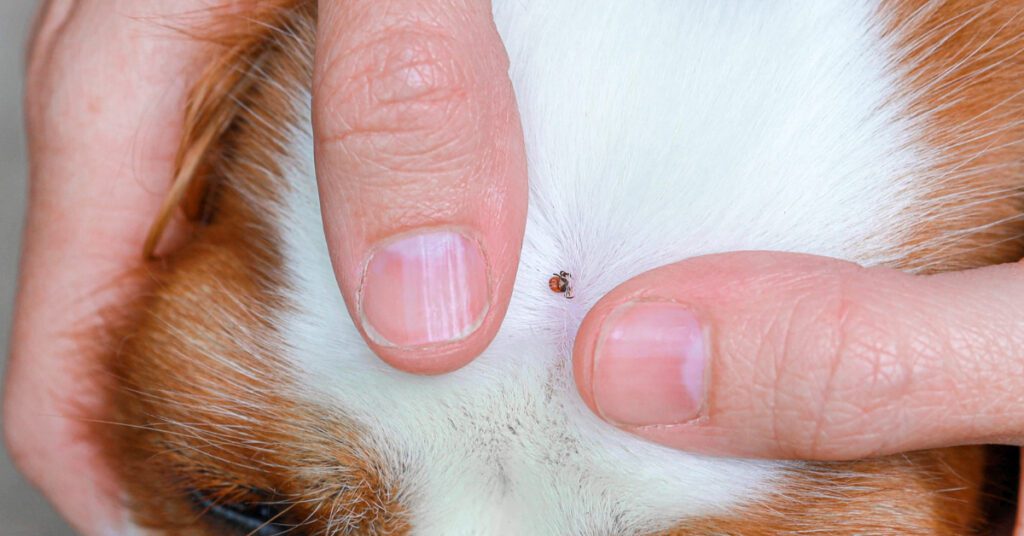
Ticks on dogs can be easy to miss, especially before they’ve started feeding. What do ticks look like on dogs? Before a tick feeds, it’s a small, flat, oval-shaped parasite roughly the size of a sesame seed, with eight legs and no wings. Once it latches on and begins feeding, it swells into a round, grayish-brown bump that may look like a small skin tag or cyst. Knowing what you’re looking for can make a big difference in how quickly you catch and remove a tick.
Identifying Ticks on Your Dog
Ticks are arachnids and more closely related to spiders and mites than to fleas or insects. They have eight legs, a single fused body region, and no antennae. The most common tick species in Wisconsin and the greater Midwest include:
- Deer tick (black-legged tick): Small and reddish-brown with a dark dorsal shield; the primary carrier of Lyme disease
- American dog tick: Larger than the deer tick, brown with white or gray markings; associated with Rocky Mountain spotted fever
- Lone Star tick: Identified by a single white dot on the female’s back; spreading northward into Wisconsin
- Brown dog tick: Uniformly reddish-brown; more commonly found in kennels and indoor environments
Before feeding, ticks are flat and small, easily mistaken for a fleck of dirt. After feeding for 24 to 48 hours, they become engorged and take on a grayish-white, bean-like appearance.
Where Do Ticks Hide on Dogs?
Ticks prefer warm, hidden areas on the body where they’re less likely to be disturbed. When checking your dog for ticks after outdoor time, pay close attention to these common hiding spots:
- In and around the ears (inside the ear flap and around the ear canal)
- Between the toes and around the nail beds
- Around the groin and inner thighs
- Under the collar or harness
- Around the tail and base of the tail
- In the armpits (axillary area)
- Around the eyelids and under the chin
Long-haired breeds can be especially difficult to check thoroughly. Running your fingers slowly through the coat and feeling for small bumps is an effective technique when you can’t easily see through the fur.
What Does a Tick Bite Look Like on a Dog?
A tick bite on a dog may look like a small red bump, similar to a mosquito bite. If the tick has been removed but a small piece of the mouthpart was left behind, you may notice a bit of localized inflammation or a persistent small lump at the bite site.
Unlike in humans, the classic “bull’s-eye” rash associated with Lyme disease rarely appears on dogs. This is one reason why tick-borne illness in dogs often goes undetected until symptoms develop. If you find a tick on your dog, note the location and date of removal, and monitor your pet in the weeks that follow for signs of illness.
How to Tell If What You’re Feeling Is Actually a Tick
When you feel an unusual bump on your dog, it’s not always a tick. Skin tags, warts, cysts, and small masses can all feel similar to an engorged tick. Here’s how to tell the difference:
Signs It Might Be a Tick
Look for the tick’s legs. If the bump has small, moving legs visible near the skin surface, it’s almost certainly a tick. Ticks also tend to feel slightly harder than a soft skin tag and may appear darker in color. An engorged tick is round and firm, with a distinct head buried into the skin.
When to Have a Vet Check the Bump
If you’re not sure what you’re feeling, it’s always safer to have a veterinarian take a look. At Frontier Veterinary Urgent Care in Greenfield, WI, we can help identify ticks and assist with removal if needed. It’s particularly important to get a professional look if you notice the bump is growing, inflamed, or accompanied by a discharge.
Tick-Borne Diseases in Dogs
The reason tick identification and removal matter so much is the diseases ticks can transmit. In Wisconsin and throughout the Midwest, dogs are at risk for several tick-borne illnesses, including:
- Lyme disease: Caused by Borrelia burgdorferi, carried primarily by deer ticks; symptoms include lameness, joint swelling, fever, and fatigue
- Anaplasmosis: Can cause fever, lethargy, joint pain, and decreased appetite
- Ehrlichiosis: Symptoms include fever, nausea, depression, and low platelet counts
- Rocky Mountain spotted fever: Potentially severe; signs include fever, swelling of the face and limbs, and neurological symptoms
Tick-borne diseases don’t always appear immediately. Some symptoms develop two to four weeks after a tick bite. If your dog has been exposed to ticks and starts showing signs of illness, especially fever, lameness, lethargy, or loss of appetite, contact your primary veterinarian promptly.
How to Prevent Ticks on Your Dog
Prevention is the most effective strategy for protecting your dog from ticks and tick-borne disease. Year-round tick prevention is recommended in Wisconsin, where ticks can remain active even during mild winter days. Talk to your veterinarian about the best tick prevention options for your dog’s lifestyle and health history.
In addition to preventive medication, check your dog for ticks after every outdoor outing, especially after time spent in wooded areas, tall grass, or leaf litter. Regular grooming and coat brushing can also help you spot ticks before they have a chance to fully attach and feed.
Ticks on Dogs: Know What You’re Looking For
Understanding what ticks look like on dogs, from their small, flat pre-feeding state to their engorged, grayish appearance after feeding, is an essential part of responsible pet ownership in Wisconsin. The sooner a tick is found and removed, the lower the risk of disease transmission.
If you find a tick on your dog and are unsure how to remove it safely, or if you’re seeing signs of illness after a known tick exposure, our team at Frontier Veterinary Urgent Care in Greenfield is here to help. Call us today at 262-226-2055. We see dogs and cats for tick-related concerns and can help you take the right steps to protect your pet’s health.